
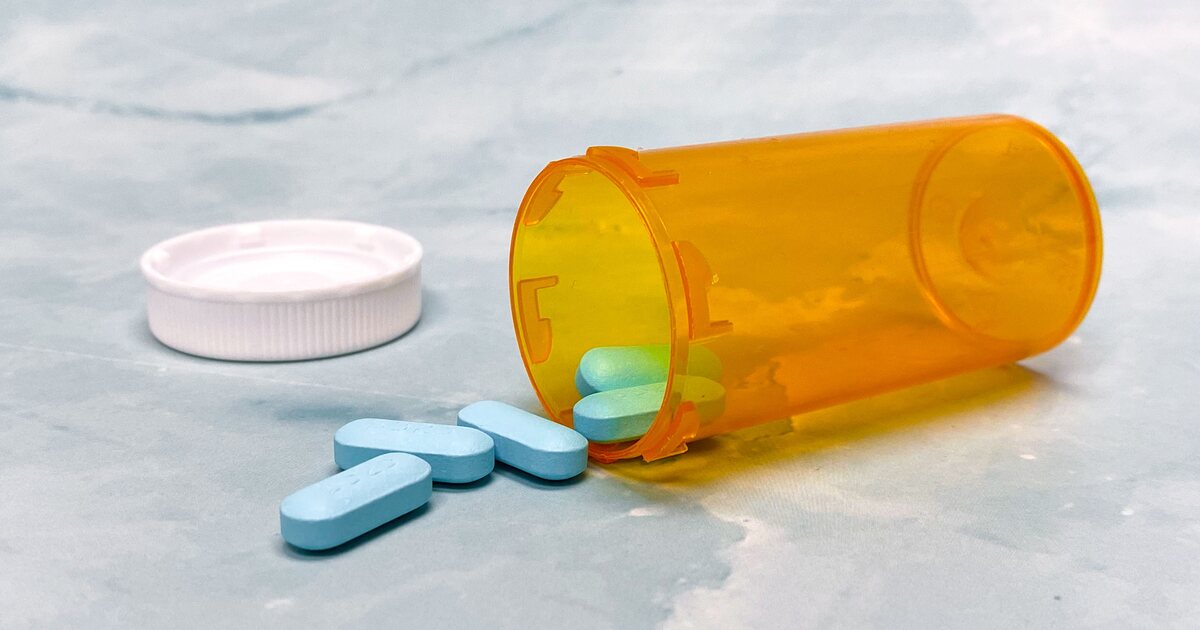
The two letters turn up everywhere once you start looking: on pharmacy signs, on the side of a stock bottle, at the top of a dispensing label next to a long number, on insurance paperwork. Most people understand them loosely as “prescription”, and that is right, but it leaves out the parts that are actually useful. People ask what does Rx mean because they are holding something with the symbol on it and want to know what it is telling them.
Rx is the traditional symbol for a prescription. It comes from the Latin word recipe, meaning “take”, which physicians once wrote at the head of every prescription. On a manufacturer’s package, “Rx only” is a legal statement that the medicine can be dispensed only on a prescription. On a pharmacy label, the Rx number identifies your specific prescription.
Those are three different jobs, and knowing which one you are looking at makes a label much easier to read.
What does Rx mean? Where the symbol comes from
The Online Etymology Dictionary traces the word recipe to the 1580s in English, meaning a medical prescription, “a formula for the composing of a remedy written by a physician”. It comes through French from the Latin recipe, the command form of recipere, so it literally means “take!”, as in take this ingredient and that one. It was the word written at the head of prescriptions, and the dictionary notes that this older sense of recipe survives chiefly in the pharmacist’s abbreviation, Rx.
That is also why the symbol looks the way it does. It is a capital R with a stroke through the leg, the mark of an abbreviated word, rather than the letters R and x standing for two separate things. The x has no meaning of its own.
You may have come across a more colorful story, that the symbol descends from the Eye of Horus, an ancient Egyptian emblem of protection and healing. It is repeated often and it makes a good caption, but it is not the account the etymological dictionaries give. The plain Latin explanation is the documented one.
Over the centuries the meaning shifted from the doctor’s instruction to the document itself, and then to the whole category of medicines that need one. When someone today says a medicine is “Rx”, they mean it is a prescription medicine, not that it is a recipe for anything.
What “Rx only” means on a medicine package
Look at a manufacturer’s carton or the large stock bottle a pharmacy dispenses from, and you will usually find the words “Rx only” somewhere on the label. This is not decoration. It is a legal marking.
Federal law, in 21 U.S.C. 353(b), describes the medicines that may be dispensed only on a prescription: broadly, those that are not suitable for use except under the supervision of a licensed practitioner, because of their potential for harm, the way they are used, or the precautions their use requires. The same section says that such a medicine is misbranded if, at any time before it is dispensed, its label fails to bear, at a minimum, the symbol “Rx only”.
The short form is relatively recent. Older packaging carried a full sentence instead: “Caution: Federal law prohibits dispensing without prescription.” The Food and Drug Administration Modernization Act of 1997 replaced that requirement with the minimum designation “Rx only”. If you find a very old bottle at the back of a cupboard with the long caution printed on it, that wording is a clue to its age.
The practical upshot for anyone reading a package: “Rx only” tells you the product is a prescription medicine. It does not tell you what the medicine is, who it was prescribed for, or anything about whether a particular person should use it. For those questions the label on the pharmacy container, and the pharmacist behind it, are the right sources.
The Rx number on your pharmacy label
The dispensing label your pharmacy puts on the bottle is a different document from the manufacturer’s label, and it uses “Rx” differently. Near the top you will usually see “Rx” or “Rx #” followed by a string of digits.
Federal law lists what the label on a dispensed prescription carries: the name and address of the dispenser, the serial number and date of the prescription or of its filling, the name of the prescriber, the name of the patient if the prescription states it, and the directions for use and any cautionary statements from the prescription. The Rx number is that serial number. It is how the pharmacy’s system finds your prescription, which is why an automated refill line asks for it first.
A few things follow from that, and they are worth knowing:
- The Rx number is specific to one pharmacy. Transfer a prescription to another pharmacy and it will usually get a new number there. The number on an old bottle from a different pharmacy will not find anything in the new one’s system.
- It is not the NDC. Many dispensing labels also print the National Drug Code of the product that was dispensed, which identifies the manufacturer’s product and package. The two codes do different jobs, and the NDC is explained in what an NDC number is.
- It is the quickest way to ask a question. If you are unsure about a refill, the fastest route to an answer is to call the pharmacy with the bottle in hand and read out the Rx number. The pharmacist can see exactly what was dispensed, when, and from which manufacturer.
When you keep a written record of the medicines in a household, the Rx number is one of the fields worth copying down, alongside the name as it appears on the label and the pharmacy’s phone number. The fields that matter are set out in the medication list template.
Rx and OTC: the two categories in one paragraph
Every medicine sold in the United States falls on one side of a line. Prescription medicines, the Rx side, need a prescriber’s order and are dispensed by a pharmacy. Over-the-counter medicines, which FDA also calls nonprescription medicines, can be bought without one and carry a standardized Drug Facts label written for the person using them. The line is not fixed forever: FDA can approve a switch from prescription to nonprescription status when it finds that prescription status is no longer necessary to protect public health and that the medicine can be used for self-medication as directed on its proposed labeling. Some switches cover a product entirely and some cover only certain uses, which is why the same ingredient can exist in both categories at once. How the OTC side works, and how to read its label, is the subject of a separate post.
Both sides share one thing that matters for identification. Federal imprint rules in 21 CFR Part 206 apply to solid oral medicines for human use, so prescription tablets and most over-the-counter tablets alike carry a code pressed into or printed on them. Whether a loose tablet came from an Rx bottle or an OTC box, that imprint is what ties it to a specific product, as explained in what pill imprint codes mean.
Other places you will see Rx
Once the core meaning is clear, the other uses fall into place.
- On pharmacy signs and names, Rx simply signals that prescriptions are filled there.
- On insurance cards and plan documents, lines marked Rx refer to the prescription drug part of the coverage rather than to doctor visits.
- On generic and brand packaging alike, “Rx only” appears regardless of who made the product. A generic version of a prescription medicine is still a prescription medicine, as covered in generic vs brand name drugs.
- In casual writing, people use Rx as shorthand for any remedy or fix. That use is borrowed from the medical one and carries no legal meaning.
Reading the symbol with confidence
Put together, the symbol tells you quite a lot. On a manufacturer’s package, “Rx only” means a prescription medicine. On a pharmacy label, the Rx number points to one prescription in one pharmacy’s records. And the symbol itself is an abbreviation more than four centuries old for the word “take”.
What it never tells you is whether a given tablet is the one that belongs in the bottle. If a tablet has come loose from its container, or two bottles have been mixed, the imprint on the tablet is the thing to check, and the pharmacist who filled the prescription is the one to confirm it. Read them the Rx number, describe or show them the tablet, and they can settle the question from their own records.
Sources
- recipe (n.), Online Etymology Dictionary
- 21 U.S. Code 353, Exemptions and consideration for certain drugs, Legal Information Institute (Cornell)
- Revised Guidance for Industry on Implementation of Section 126 of the Food and Drug Administration Modernization Act of 1997, Elimination of Certain Labeling Requirements, Federal Register (21 July 1998)
- Understanding Over-the-Counter Medicines, U.S. Food and Drug Administration
- Prescription-to-Nonprescription (Rx-to-OTC) Switches, U.S. Food and Drug Administration
- Part 206, Imprinting of Solid Oral Dosage Form Drug Products for Human Use, eCFR