Shape and colour are what people remember. The imprint is what actually identifies. Every serious medicine reference is organised around it, and once you can read one properly, a loose tablet stops being anonymous.
Who decides what the code says
The manufacturer does, within the rules of the market it sells into. A code is tied to one company's specific product at a specific strength, not to the drug in general. That single fact explains most of the confusion people run into: the imprint identifies a product, and several different products can contain the same medicine.
It also explains why a repeat prescription can arrive looking entirely unfamiliar. A different manufacturer means a different code, and often a different shape and colour, while the medicine inside is unchanged. Our guide to why your refill looks different walks through how to check one.
How to read an imprint properly
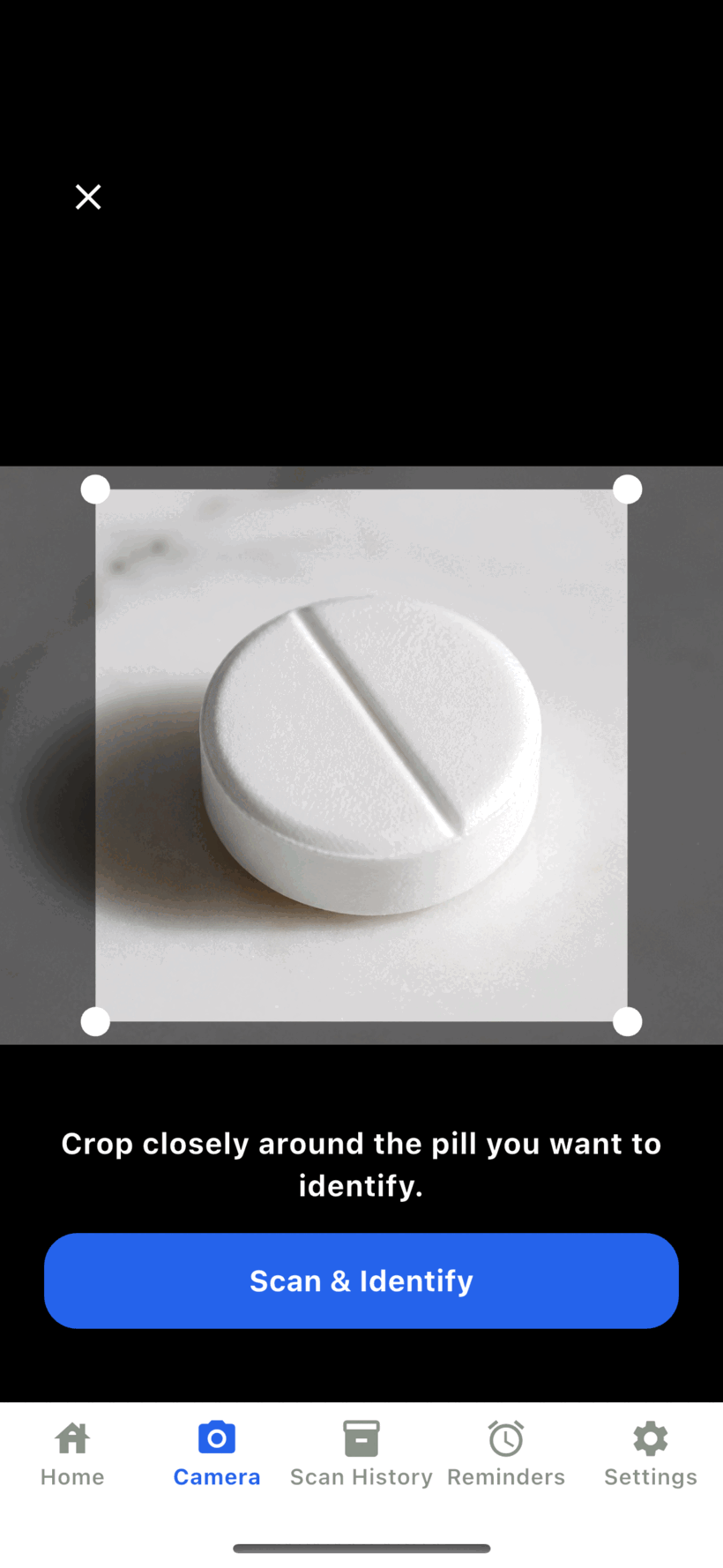
- Find the whole code. An imprint can run across both faces of a tablet, and a score line is not a character. Check the reverse before you decide the code is only three characters long.
- Keep the spacing and the symbols. A space, a hyphen, and a logo are part of the code. Some manufacturers mark a stylised symbol rather than letters, which is why describing it in words so often fails where a photo succeeds.
- Do not guess ambiguous characters. The classic confusions are 0 and O, 1 and I and l, 5 and S, and 8 and B. If a character is genuinely unclear, treat it as unknown rather than committing to a reading that sends you to the wrong medicine.
- Note the shape and colour alongside it. The imprint does the heavy lifting, but shape and colour resolve the remaining ties, especially where a short code is reused across a manufacturer's range.
What an imprint cannot tell you
An imprint identifies what a tablet was manufactured and marked as. It does not verify what is inside it, and it carries no information about whether a medicine is appropriate for you. Unmarked tablets, repackaged medicines, and anything bought outside a pharmacy sit outside the system that makes imprint identification work in the first place.
Used for what it is good for, though, an imprint code turns an unknown tablet into a specific, checkable answer in seconds.
Common questions
Why do pills have imprint codes at all?
In the United States, solid oral medicines are generally required to carry a unique identifying marking, so that a tablet separated from its packaging can still be traced back to what it is. That requirement is the entire reason identification from a loose pill is possible.
Why does the same medicine have different imprints?
Because the imprint identifies the manufacturer's specific product, not the active ingredient. When several companies make a generic version of the same medicine, each carries its own code, and often its own shape and colour too. A refill that looks completely different from the last one is usually just a different manufacturer.
What if the imprint is worn away?
A partial imprint narrows the field rather than settling it, and the honest answer is that several medicines may still fit. This is the point at which a pharmacist is genuinely better than any tool, because they can cross-check against what you were actually dispensed.